Less water usage, faster throughput: the advantages of vertical crate washing at Brabant Plant
Hygiene is the cornerstone of modern greenhouse horticulture. Especially for Brabant Plant, a leading family business that grows young vegetable plants, field vegetables and ornamental crops for the professional European market. To definitively keep persistent plant viruses out of their operation, the company went in search of an automated, water-saving and proven cleaning process. They found that partner in Limex.
Keeping viruses firmly out of the system
The need for a watertight protocol was the main driver behind the innovation. Viruses such as ToBRFV and CGMMV pose a real threat to the sector. Leon Ammerlaan, Production Manager at Brabant Plant, explains:
“We wanted a protocol that has proven itself against dangerous diseases such as ToBRFV, but also CGMMV, so that we can be sure that we can use all trays and crates 100% clean in our company.”
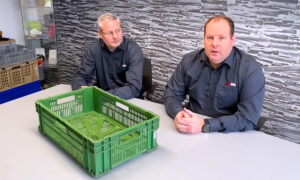
With the expertise of Limex specialists Bart Bovee and Joep Janssen, the focus was not only on cleaning effectiveness, but also on process optimisation. Their advice was to wash crates vertically (on the short side). This turned out to be a perfect match, Leon confirms:
“They said: please start washing on the short side, because that really saves a lot of water. And we are really seeing the benefits of that at the moment.”
Vertical washing: less water, maximum efficiency
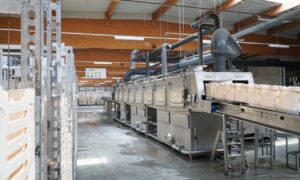
Washing crates on the short side brings major operational advantages. Because the crates move vertically through the washing line, significantly less water is carried out of the machine. The warm water flows directly back into the main tank. As a result, hardly any energy is lost in reheating the water.
In addition, this method has a positive effect on the use of cleaning agents: the concentration of chemicals remains much more stable. But perhaps the biggest advantage in daily practice is speed. Leon explains:
“We really notice that it goes faster, especially the drying process. This speeds up throughput, meaning less extra stock is needed and the washed crates can be reused more quickly.”
Preparing for tomorrow’s hygiene standards
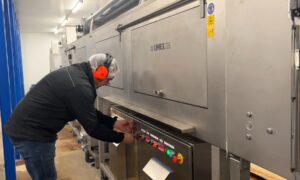
The implementation of the new crate washing line went almost flawlessly. Although the start-up phase revealed a small point for improvement, this was quickly and effectively resolved. Wim van der Werff, Head of Technical Services at Brabant Plant, says: “I see it as a very good start-up process.”
The investment was clearly made with the long term in mind. Leon adds: “We believe that hygiene will only become more important in the future, and therefore we think this is one of the steps that you as a plant grower must take and continue to optimise.”
Curious what we can do for you? Feel free to get in touch.